Mordecai
Originally from the tribe of Benjamin and taken into captivity, Mordecai became a member of King Ahasuerus’ royal court. We mentioned him previously in our commentary on the Book of Esther and in our book about the prayer of Esther. In order to know his personality more closely,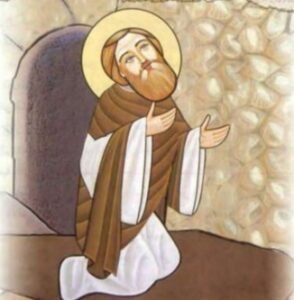 it is appropriate for us to study his prayer, which is included in the Septuagint Greek text of the Book of Esther but not in the Hebrew text. Mordecai prayed it after he heard of the royal decree proclaimed by the king’s vizier Haman, to kill all the Jews in a single day in all the provinces of Medi and Persia.
This decree was impossible for anyone in or outside Jerusalem to stop, for as per the decrees of Medi and Persia, a law sealed with the king’s signet ring could not be repealed. But against all expectations, Mordecai and his cousin Queen Esther, King Ahasuerus’s wife,, were able to overturn the decree through their humble and loving prayer and fasting. God transformed the day which was supposed to be the day of killing of God’s people to a joyful feast of celebrating God’s wondrous salvation.
The watchful eyes of God ordained their salvation through Queen Esther and Mordecai. Haman was crucified on the tree which he had prepared for Mordecai, God was magnified in His people, and the words of the Psalmist were fulfilled, “The wicked plots against the just, And gnashes at him with his teeth. The Lord laughs at him, For He sees that his day is coming.” (Psalm 37:12-13)
Mordecai’s Prayer According to the Septuagint (Esther 4)1 He then beseeched the Lord, remembering all the works of the Lord, [17a] and said, “O Lord, Lord, almighty King, all things are under Your power,
and there is no one to oppose You in Your desire to save Israel. [17b] For You have made heaven and the earth, and every wondrous thing under heaven, and You are the Lord of all, and there is no one who shall resist You, Lord. [17c]
You know all things: You know, O Lord, that it is not out of disrespect or arrogance or love of honor that I did this, to refuse to bow down to the haughty Haman, for I would have been happy to kiss the soles of his feet for the salvation of Israel. [17d]
For I did this in order that I not place the glory of man above the glory of God. I will not bow down to anyone but You, my Lord, and I will not do these things out of arrogance. [17e]
“And now, O Lord God, King, God of Abraham, save Your people, for they look upon us for our destruction, and they desire to destroy Your inheritance from the beginning. [17f]
Do not disregard Your portion which You redeemed for Yourself out of the land of Egypt. [17g]
Hear my prayer and be merciful to Your inheritance. Turn our mourning into feasting so we may live and hymn Your name, O Lord. Do not destroy the mouth of those who praise You.” [17h]
Then all Israel cried out with all their might, for their death was before their eyes. [17i]
- Comparing the Prayer of Mordecai and the Prayer of Esther The Prayer of Mordecai is a wonderful portrait of the prayer that is acceptable to God in times of trouble!
Mordecai raised the orphan Hadassah (Esther) and filled her heart with the love of God and the love of His people.
The two prayers revealed the Mordecai’s personality, as Esther learned from him the following:
- Mordecai’s prayer began with the glorification of the Almighty God, the Omnipotent and the wonderworker, believing He is the God of the impossible. That is why Mordecai and Esther turned to God with prayer and fasting.
- They both had complete faith in God, the all-knowing and all-wise One, the One who is able to satisfy all people’s needs as His children and grant them joy in place of sorrow.
- Along with his great love for the God who works miracles and for the people, Mordecai was very keen to retain his humility. Esther also had the same spirit in her prayers and actions, which she learned from Mordecai more by example than words: to demonstrate humility, steadfastness and solemnity in her striving towards divine truth. And so God listened to them and saved the entire people.
- Mordecai practiced repentance practically when he put on sackcloth, fasted, resorted to prayer and asked Esther to act, which is why God took action. He deprived King Ahasuerus from sleep, leading him to read in the book of the Kings of Medi and Persia, to recall that Mordecai had saved his life from assassination, and to command that he be honored and rewarded.
- When Mordecai had refused to bow down to Haman at the palace gate like everyone else, Haman had the gallows prepared for Mordecai. Instead it was Haman who was hanged on it, along with his ten children. Instead of murdering all Mordecai’s people across the nation in a single day, it was Haman’s followers who perished. God bestowed dignity and honor on Mordecai and his people, and fear and terror overcame their opponents.
- Mordecai’s prayer and actions revealed how his heart was full of selfless love for all the people. He did not seek his own interests or those of his family or tribe, but the salvation of the entirety of his people. In his prayer, he cried out, saying, “And now, O Lord God, King, God of Abraham, save Your people, for they look upon us for our destruction, and they desire to destroy Your inheritance from the beginning.” [17f] Do not disregard Your portion which You redeemed for Yourself out of the land of Egypt.” [17g]
Esther had the same spirit as she interceded for her people: “For how can I endure to see the evil that will come to my people? Or how can I endure to see the destruction of my countrymen?” (Esther 8:6)
This is how the Church feels towards every soul, and is what every shepherd and servant longs for. It is the salvation of all. These are the feelings expressed in the words of St. John Chrysostom, who never ceased to pray and work for the salvation of every soul. He says: [There is nothing I love more than you, no, not even light itself. I would gladly have my eyes put out ten thousand times over, if it were possible by this means to convert your souls; so much is your salvation dearer to me than light itself. For what profit to me in the rays of the sun, when despondency on your account makes it all thick darkness before my eyes? ….. For where is our hope, if you do not make progress? Where our despondency, if you do excellently? I seem to have wings, when I hear anything good of you. Fulfil ye my joy. Philippians 2:2 This one thing is the burden of my prayers, that I long for your advancement. But that in which I strive with all is this, that I love you, that I am wrapped up in you, that you are my all, father, mother, brethren, children.]
Because of the abundant love of Mordecai and Esther, a new royal decree was issued (included in the rest of the book of Esther Chapter 8:12) - When Mordecai heard of Haman’s plot against his people, he did not give in to despair or depression, but reassured Esther that deliverance will arise for the Jews whether she takes action or remains silent. It was the Lord who gave her this opportunity as a queen to receive the blessing of working on behalf of the kingdom of God and his people, and to be rewarded. He sent to her saying, “Do not think in your heart that you will escape in the king’s palace any more than all the other Jews. For if you remain completely silent at this time, relief and deliverance will arise for the Jews from another place, but you and your father’s house will perish. Yet who knows whether you have come to the kingdom for such a time as this?” (Esther 4:13-14)
- Even his own experience of severe hardship was not able to disturb Mordecai’s spiritual joy as a man of God. Hear what he said in his prayer, “Turn our mourning into feasting so we may live and hymn Your name, O Lord. Do not destroy the mouth of those who praise You.” This is why Christ likened the believers – in their struggles amid trials in the world and the wars of the devil – to the five wise virgins. These carry their lamps filled with the oil of gladness as they await their bridegroom, that they might glorify him with the heavenly hosts forever (Matthew 25: 1-13). Astrologers and magicians chose a day for Haman kill all God’s people in one day, but their plot was transformed into a joyful feast, an annual celebration, the great ‘Feast of Purim,’ or as it was often called, ‘Mordecai’s Feast.’
- The prayer came from a humble and contrite heart before God, firm and earnest in the truth. For the sake of his love for God, he did not bow down to Haman and if it were for God’s sake, he was even willing to happily kiss the soles of his feet! It was customary for the defeated kings to kiss the soles of the feet of the victorious king. In some languages, instead of “kissing,” the word used was “licking” or in other words, licking the feet of the conquering king with his tongue. The point Mordecai wanted to make is that he does not want to honor someone who thinks himself greater than God.
- Haman knew that what Mordecai bore him no personal enmity, but refused to bow to him for religious reasons. This is why he decided that the only solution was to exterminate the entire people. Because the real war is between God and the devil over the acquisition of the human heart, God wants to establish His kingdom in humans’ heart. God desires to transform their hearts to a heaven, while the devil wants to turn their hearts into the kingdom of injustice, hatred and eternal destruction.
- The destruction of Haman, his children, and his followers indicates the destruction of Satan and all the forces of darkness. (Colossians 2:14-15)
- Throughout his life Mordecai was preoccupied with being an icon of the faithful God. He was faithful in the upbringing of Esther, in preserving the king’s life (that is, in his job), in his worship to God, and in his love for the people of God.
- As sleep fell out of Ahasuerus’s eyes, he remembered that Mordecai did not receive a reward worthy of his faithfulness in his job, and as we meet our Savior face to face he counts all the blessings He bestowed us while we were in the world as nothing. And He offers us what an “eye has not seen, nor ear heard, nor have entered into the heart of man, The things which God has prepared for those who love Him.” (1 Corinthians 2:9).
- As the king took off his ring from Haman and gave it to Mordecai, so do we become heirs — heirs of God and joint heirs with Christ. (Romans 8:16-17) St Augustine says about that signet ring, “Hold unto what you have received for shall never be altered; it is a royal ring”1 With this ring, we become the God’s ownership as Theodore of Mopsuestia says, “The sign with which you are being sealed with is the sign that you have become sheep in Christ’s pasture”2 With this seal, we also become spiritual warriors as St. Cyril of Jerusalem says, “Each of you offers himself to God in the presence of the innumerable hosts of angels, so the Holy Spirit places His seal upon your souls. Thus, you became members of the great King’s army.”1
- Mordecai’s unique qualities not only bore fruit in the life of his adopted cousin, but even in the entire people of God and all the nations of the world. When Mordecai was magnified the Bible tells us that, “the Jews had light and gladness, joy and honor. And in every province and city, wherever the king’s command and decree came, the Jews had joy and gladness, a feast and a holiday. Then many of the people of the land became Jews, because fear of the Jews fell upon them.” (Esther 8:16- 17)
Thus, as the Lord Christ is glorified with His eternal glory, the Church enjoys the light, enlightenment, joy of the soul, and true honor from within.
Prepared by:
Fr. Tadros Yacoub Malaty
Deacon Bishoy Boshra Behnam
Translated By:
Michael Stefanos
Mary F. A.
Monica Mitri
Designed by:
Rafik Nasif