The Prayer of Esther and the Additions to Esther
There are two versions of the book of Esther; a short version which is contained in the Hebrew text and a longer version which is contained in the Greek text (the Septuagint) with additional texts such as prayers, letters and dreams that are placed in their correspondent order throughout the book. These are called the “Additions to Esther.” St. Jerome translated these texts and added them to the Hebrew version in the Vulgate Latin Translation as an appendix to the Book of Esther.
The common version of the “Additions to Esther” is supported by both the Codex Vaticanus and the Alexandrian manuscripts as well as by the Jewish historian, Josephus.
Is there a need for these additional chapters? 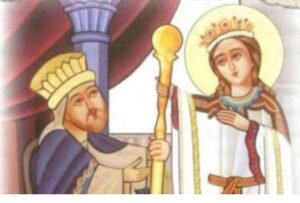
- Jewish scholars questioned for so long the absence of the word “God” in the book of Esther. The Greek translation provided a solution for this issue. The word “God” is mentioned more than 50 times in this version.
- The extra chapters in the “Additions to Esther” were not meant to preserve to history the letters or the events that were not included in the Hebrew text, but rather were meant to reveal the true character of Esther as a faithful woman of God, the Almighty who is full of love, mercy and wisdom. It also revealed the secret to God’s quick answer to Esther’s prayer and provided us with a biblical understanding of the acceptable prayer. The following points provide a summary of this biblical mindset:
- Esther confessed her sins and the sins of her people (14:6-7). She did not blame God for leaving the fate of His people in the hands of Haman, the king’s most trusted advisor. But, blamed it on the Israelites’ disobedience in worshiping idols which was customary in the kingdoms of Persia.
- The devil entices even the believers to stop praising God and to worship the idols instead.
- Esther declared in her prayer that it is God, the Almighty, who works and speaks through her.
- The only solution to the problem is through the power of God, the savior. E. Esther prayed to God to deliver her from fear, the most dangerous enemy that can destroy faith (14:19).
- In the midst of her sorrows and tears, her faith in God gave her the spirit of joy and hope (14:18).
The Prayer Of Esther
- And Queen Esther, seized with the agony of death, fled to the Lord for refuge.
- And removing her royal garments, she put on the garments of distress and mourning. Instead of the magnificent perfumes, she covered her head with ashes and dirt. She humbled her body exceedingly. She set aside everything of her worldly joy, and her hair was unkempt.
- She implored the Lord God of Israel, and said: “O My Lord, You alone are our King. Help me, who am alone and have no help but You!
- . For my risk of danger is in my hand.
- I have heard from my birth in the tribe of my family that You, O Lord, chose Israel out of all the nations, and our fathers out of all their ancestors, for an everlasting inheritance, and do for them whatever You have spoken.
- Now we sinned before You, and You have delivered us into the hands of our enemies.
- because we have worshiped their gods. O Lord, You are righteous.
- . But now they are not satisfied with the bitter state of our bondage, but they have pledged to their idols.
- to abolish the decree You have spoken and to destroy Your inheritance, to close the mouths of those who praise You, and to extinguish the glory of Your temple and Your altar,
- and to open the mouths of the heathen to proclaim the virtues of their false gods, and to extol a human king forever.
- “O Lord, do not give Your scepter over to those who are not. Do not let them laugh at our fall, but turn their counsel against themselves, and make an example of the one who rules against us.
- Remember us, O Lord. Manifest Yourself in the time of our affliction, and encourage me, O King of gods and ruler over every power.
- Grant to my mouth proper words in the presence of the lion, to turn his heart to a hatred of our enemy, so that he and those agreeing with him may perish.
- Save us by Your hand and help me who am alone and have no one but You, O Lord.
- “You know all things, and You know I hate the glory of the lawless and abhor the bed of the uncircumcised and of every foreigner.
- . You know my necessity, for I abhor the symbol of my proud station which is upon my head on the days when I appear in public, as if it were a menstrual rag, and I do not wear it on the days I am alone.
- Your handmaid has not eaten at the table of Haman, nor have I honored the banquet of the king, nor drunk the wine of libations.
- Neither has Your handmaid rejoiced since the day of her elevation, except in You, O Lord, God of Abraham.
- O God, who have power over all, hear the voice of us in despair, and deliver us from the hand of those acting wickedly, and deliver me from my fear.”
Queen Esther Grants Joy to Many Generations!
The book of Esther explains an important event that took place after Persia conquered the kingdom of Babylon and destroyed its capital.
Some Jews chose to live in the land of captivity, among whom was a girl named Esther. She found favour in King Xerxes’ eyes and he chose her to replace the Persian Queen, Vashti. The king’s evil vizier, Haman, wanted to destroy the Jews and eradicate them to take over their riches and their belongings. Esther intervened as a faithful woman who trusts in God to protect His people. She was able to persuade the king, reveal Haman’s evil plan and save her people from a terrible fate and thus Haman was executed. The Jews still celebrate their deliverance to this day and is known as the feast of Purim.
The Prayer of Queen Esther:
“And Queen Esther, seized with the agony of death, fled to the Lord for refuge. And removing her royal garments, she put on the garments of distress and mourning. Instead of the magnificent perfumes, she covered her head with ashes and dirt. She humbled her body exceedingly. She set aside everything of her worldly joy, and her hair was unkempt. She implored the Lord God of Israel.”
The prayer of Esther reveals to us what is beyond the words, the secret behind her devotion, faith, thoughts, and life.
This prayer is mentioned in the Septuagint version in chapter five of the Book of Esther, while in the Latin Vulgate, it is part of the “Additions to Esther” as an appendix to the book (chapter 14).
It is a prayer that came out of a heart of a devoted and committed believer. God accepts this prayer as a pleasing sacrifice of love.
Esther’s Prayer Reveals the Truth about her Life
First: A queen that gave no place for vain glory in her heart [Esther 14:16].
Second: A queen whose shelter is God [1].
Third: A rejoicing queen [2].
Fourth: A queen that seizes on the divine promises [3-5].
Fifth: A queen that repents her sins and the sins of her people [6-7].
Sixth: A queen that requests salvation from the deadly fear! [19].
First: A Queen that Gave No Place to False Glory in Her Heart
Esther learnt from her teacher, Mordecai, the spirit of prayer that comes from a heart that does not hold unto anything; and thus, did not seek any false glory or luxurious feasts. She declared in her prayer how much she despised the high status as a “menstrual rag” and that she did not esteem the palace or its feasts, but only the Lord.
“And removing her royal garments, she put on the garments of distress and mourning. Instead of the magnificent perfumes, she covered her head with ashes and dirt. She humbled her body exceedingly. She set aside everything of her worldly joy, and her hair was unkempt.” [2].
“You know all things, and You know I hate the glory of the lawless and abhor the bed of the uncircumcised and of every foreigner. You know my necessity, for I abhor the symbol of my proud station which is upon my head on the days when I appear in public, as if it were a menstrual rag, and I do not wear it on the days I am alone. Your handmaid has not eaten at the table of Haman, nor have I honored the banquet of the king, nor drunk the wine of libations.” (15-17)
As a queen, she was committed to appear in public in a certain clothing that fits her status with all its greatness, high esteem, and glory; yet she despised these earthly false matters from within.
- She hates the glory of the lawless: When she observed that the royal palace was ruled by the law of injustice in favor of the king and his royalties, she despised that law that contradicts the law of the Lord.
“The Apostle [Paul] warns us: “Be not desirous of vainglory.” [Galatians 5:26] And the Lord, rebuking the Pharisees, says, ” How can you believe,
which receive honor one of another, and seek not the honor that comes from God only?” [John 5:44]. Of these too the blessed David speaks with a threat: God has scattered the bones of him that encamps against thee” [Psalms 53:5].”1
St. John Cassian
“Those that are occupied with the earthly matters would not allow for the establishment of new matters or for the old ones to be cleansed.”
Origen
- She abhors the bed of the uncircumcised: She greatly esteems that she belongs to the people of God, the circumcised people with whom God has made a covenant. She lived as a wife of the uncircumcised king but abhorred his bed, because she did not want to unite with someone that does not believe in God.
- God knows her necessities: She did not have any special requests, not because she is a queen and does not lack anything, but because God knows her necessities. She accepts from His hand what is extremely necessary and does not desire any luxuries.
- She exhibits intense asceticism: She considered the royal garments that she had to put on when she appeared before the king or the people as a “menstrual rag” that she longs to get rid of, and thus she does not wear it when she was by herself in her private room; but rather exhibited intense asceticism in her food, drink and garments.
- She has nothing to desire from the table of Haman or the banquet of the king: Her food and drink is what feeds and waters her soul, namely her participation with God at His heavenly table. Many people claim that they can find joy and pleasure in the extravagant life, while the spiritual life brings forth grief and depression. However, the reality is the other way round, for the luxurious life carries inner bitterness and depression within it in the midst of its laughter and extravagance, while the life with God brings deep spiritual joy in the midst of pain and troubles. Sin causes man to lose his spiritual joy, while repentance grants him joy in the midst of the tears, and inner peace despite the narrow gate. It was said about the soul that lives in extravagance: “But she that lives in pleasure is dead while she lives” [1 Timothy 5:6].
“There is nothing more grievous than luxury. Hear what Moses says about it: “[Jacob] grew fat and kicked; The beloved one kicked out.” [Deuteronomy 32:15 LXX]. Moses does not say that Jacob walked out, but that the beloved one kicked out, suggesting how haughty and unbridled he had become. And elsewhere Moses says, when you have eaten and drunk, “beware that you forget not the Lord your God.” [Deuteronomy 8:11] In this way, luxury often leads to forgetfulness. As for you, my beloved, if you sit at table, remember that from the table you must go to prayer. Fill your belly so moderately that you may not become too heavy to bend your knees and call upon your God…The time after dinner is the time for thanksgiving, and he who gives thanks should not be drunk but sober and wide awake. After dinner let us not go to bed but to prayer, or we may become more irrational than the irrational beasts.
I know that many will condemn what I lay, thinking that I am introducing a strange new custom into our life; but I will condemn more strongly the wicked custom which now prevails over us. For we were not born, we do not live, in order to eat and drink; but we eat in order to live. At the beginning life was not made for eating but eating for life. But we, as if we had come into the world for this purpose, spend everything for eating.”1
St. John Chrysostom
6- She rejoices that she is the daughter of Abraham: She declared that she is happy and joyful, not because of her position as a queen, but for being the daughter of Abraham [18] with whose children, God has made a covenant.
Some people may become ascetic, depriving themselves of life’s necessities, yet their hearts are still occupied with trivialities; and thus, Christ our Lord – the source of satiation – would not find a place in these hearts to rest His head. On the other hand, she used to put on the garments of glory before the king and his royalties, but they had no place in her heart. People might judge that she lives in a high status and in luxury, accompanying the king in his feasts, yet nobody knows that her glory and her desires are in God alone, her heavenly Feast.
“My poor soul, what do you seek after?!
If you desired wisdom, you will find that Jesus is the source of wisdom, even the wisdom itself!
If you desired strength and power, He is the Almighty!
If you sought pleasure and joy, He is the true source of joy!
If you longed for inebriation, His love intoxicates the soul!
If you hungered for bread, He is the Bread of life!
If you admired richness, He is the Creator of all!
If you desired rest, you will find your rest in Him alone!
Accept Him, for no one else can satiate you.
St. Augustine
“And perhaps, as the Apostle says, “those who by reason of use have their senses exercised to discern both good and evil” (Hebrews 5:14) Christ becomes each of these things in turn, to suit the several senses of the soul.
He is called the true Light, therefore, so that the soul’s eyes may have something to lighten them. He is the Word, so that her ears may have something to hear. Again, He is the Bread of life, so that the soul’s palate may have something to taste. And in the same way, He is called the spikenard or ointment, that the soul’s sense of smell may apprehend the fragrance of the Word. For the same reason He is said also to be able to be felt and handled, and is called the Word made flesh, so that the hand of the interior soul may touch concerning the Word of life.
But all these things are the One, Same Word of God, who adapts Himself to the sundry tempers of prayer according to these several guises, and so leaves none of the soul’s faculties empty of His grace.”
Origen
Second: A Queen Whose Shelter is God
No wonder that the girl that had lived as an orphan for a long time has experienced her heavenly Father in all circumstances. When she was appointed queen, God was her treasure and shelter. It was said: “Queen Esther, seized with the agony of death, fled to the Lord for refuge.” The word “fled” means
that she found her shelter in God. Esther did not search for human means, like asking for advice from her trusted friends, but rather she hastened immediately to the shelter she is accustomed in taking refuge in; the Lord who is capable to save from death!
Third: A Joyful Queen
What attracts our attention is the saying: “worldly joy” [2] and also: “Neither has Your handmaid rejoiced since the day of her elevation, except in You, O Lord, God of Abraham.” [18]. She also describes herself as “alone” [3, 14] twice, not to express her feeling of being lonely, for although she had no one to share her feelings with who can understand her inner struggles, her suite was like a paradise, where she would encounter the Lord her God to be in communion with Him. Her glory was from the inside, for the Lord is the secret of her joy and glory.
She never ate at the table of Haman nor did she honor the banquets of the king. She never tasted the wine of the drink offerings, yet she was as jubilant as someone who eats the bread of angles, sits with the heavenly and drinks of the wine of God’s love. Even if the true believer considered himself lonely, in the midst of his loneliness, he experiences an inner joy in the Lord!
“Through You I arise, but without You I am doomed!
Through You I am filled with joy, and without You I perish in grief!”
St. Augustine
Fourth: A Queen that Relies on the Divine Promises
“She implored the Lord God of Israel, and said: “O My Lord, You alone are our King. Help me, who am alone and have no help but You! For my risk of danger is in my hand. I have heard from my birth in the tribe of my family that You, O Lord, chose Israel out of all the nations, and our fathers out of all their ancestors, for an everlasting inheritance, and do for them whatever You have spoken.” [3-5]
The saying: “Help me, who am alone and have no help but You!” was repeated [3, 14], for what fills up the emptiness of her loneliness is to review what she has learned from the moment of her birth, to suck the milk of the divine promises. She, along with the rest of her people, is the inheritance of the Lord, and in return they are enjoying Him as their eternal inheritance! This is the inheritance that we ought to give our children: the true divine promises! This is their treasure here on earth and for eternity.
Fifth: A Queen that Repents Her Sins and the Sins of Her People
Although she was a queen, she was not occupied with the luxuries she received in the land of captivity nor did she complain about what came upon her and her people. She knew that God is just, righteous, and has allowed them all these things to happen because of their sins. There is no path to salvation without repentance, both on the personal and the congregational level, for she said: “Now we sinned before You, and You have delivered us into the hands of our enemies because we have worshiped their gods. O Lord, You are righteous.” [6-7].
“For the just man takes note of his own weakness…the wise man recognizes it, the foolish one does not. Indeed, the wise man is moved to repentance by his own faults, while the foolish one takes pleasure in his. “The just man is the accuser of himself,” while the unjust one is his own apologist. The just man wishes to anticipate his accuser in the admission of his sin, while the unjust one desires to conceal his. The one rushes on in the beginning of his speech to reveal his wrongdoing, the other attempts to lay the accusation to rest by the garrulousness of his speech, so as not to reveal his wrongdoing.”
St. Ambrose
Esther shared in the pain of her brethrens with all her heart, but pain did not swallow her up as it is clear in her prayer:
- In her complaint before God, she declared that the storm raging is against God Himself, as though her people were not a side in this battle, but rather the battle is between God and the devil, “O Lord do not give Your scepter over to those who are not. Do not let them laugh at our fall, but turn their counsel against themselves, and make an example of the one who rules against us.” [11].
- The enemy cannot withstand God’s promises to His people, and thus tries to abolish what God has ordained with His mouth. “But now they are not satisfied with the bitter state of our bondage, but they have pledged to their idols to abolish the decree You have spoken and to destroy Your inheritance.” [8-9].
- The enemy is striving to take away the spirit of joy and praise from the faithful. He wishes to shut the mouths of them who praise so that none of them would carry the spirit of joy in the Lord or utter His praises and thanksgiving, “to close the mouths of those who praise You, and to extinguish the glory of Your temple and Your altar, and to open the mouths of the heathen to proclaim the virtues of their false gods, and to extol a human king forever.” [9-10].
- Despite her trust in God the Savior, Esther asks for more: “Remember us, O Lord. Manifest Yourself in the time of our affliction, and encourage me, O King of gods and ruler over every power.” [12]. “Save us by Your hand and help me who am alone and have no one but You, O Lord.” [14].
- Satan has compared the king – her husband – to a lion that would devours the people of God; yet his heart is in the hands of the Lord is in the hands of the Lord,
He turns it wherever He wishes from persecuting the people of God to abhorring those that fight against them. “Grant to my mouth proper words in the presence of the lion, to turn his heart to a hatred of our enemy, so that he and those agreeing with him may perish” [13].
“At the moment, we are still fighting in this battlefield, we smite and are smitten; but who shall conquer?
The man that conquers, who even when he smites presumes not on his own strength but relies upon God that cheers him on. The devil is alone when he fights against us. If we are with God, we overcome the devil: for if you fight alone with the devil, you will be overcome. He is a skillful enemy: how many battles has he won! Let the Almighty be invoked to your aid against the devices of the devil. Let Him dwell in you, who cannot be overcome, and you shall securely overcome him who is accustomed to overcome. But whom does he overcome? Those in whom God does not dwell.”
St. Augustine
The devils can only harm those that listen to them, who are not protected by God’s mighty hands, and who were not taught the secret of truth. However, they fear the righteous.
Lactantius
Sixth: A Queen that Requests Salvation from the Deadly Fear!
Esther asked God to answer her prayer, for she has no hope but in Him. She requested salvation from the sinners (who are surrounding her), but concluded her prayer by requesting His salvation from her internal weaknesses, especially her despair and fear which are the enemies of faith: “O God, who have power over all, hear the voice of us in despair, and deliver us from the hand of those acting wickedly, and deliver me from my fear.” [19].
+ “Whoever you are that have sinned, and hesitate to repent for your sin, despairing of your salvation, hear David groaning. To you, Nathan the prophet has not been sent, David himself has been sent to you. Hear him crying, and with him cry; hear him groaning, and with him groan; hear him weeping, and mingle tears; hear him amending himself, and with him rejoice. If from you sin could not be excluded, do not exclude your hope of receiving forgiveness. Nathan the prophet was sent to that man, observe the king’s humility. He did not reject the words of him giving admonition, he said not, how dare you speak to me, a king? An exalted king heard a prophet, let the humble people of Christ, listen to Christ.”1
St. Augustine
+ “If you were a stranger to every outer disturbance, you will hear the Sprit utter inside you with what is glorified. Your soul is the Jerusalem that pleases Christ, then why are you still wandering in the marketplaces of the Babylonians?”2
St. John Saba
Prepared by: Fr. Tadros Yacoub Malaty
Deacon Bishoy Boshra Behnam
Translated By:
Mary F. A. – Nancy Louis – Michael Stefanos
Designed by: Rafik Nasif